
Meet Your New Coaching Class Manager
Manage Students, Attendance, Fees, Reports & WhatsApp — all in one powerful and easy-to-use app.
📘 Chapter 1: Sources of History
Complete Exercise Solutions
📖 Textbook Question
The teachings of Vardhaman Mahavir are found in the...........texts.
- a) Upanishads
- b) Tipitaks
- c) Agama
- d) Sangham
✅ Answer
The teachings of Vardhamana Mahavira are found in the Agama texts.
📖 Textbook Question
The most ancient sources of Indian history are the ........... .
- a) Aranyaka
- b) Veda
- c) Brahmana texts
- d) Upanishads
✅ Answer
The most ancient sources of Indian history are the Vedas.
📖 Textbook Question
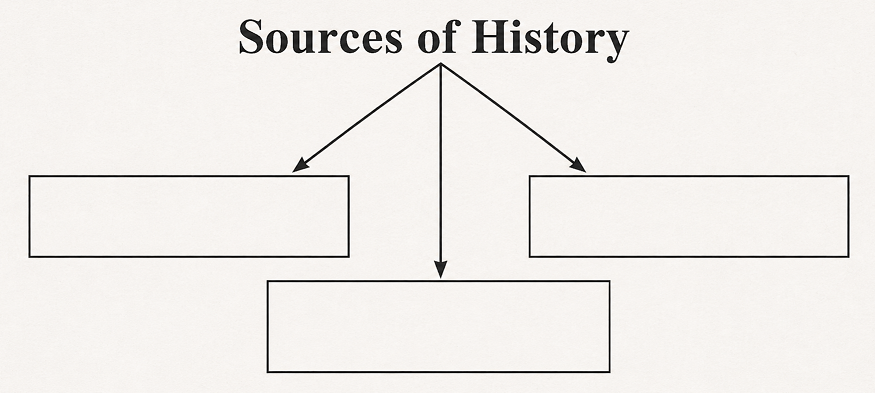
| Group ‘A’ | Group ‘B’ |
|---|---|
| 1) Written sources | a) Folk songs |
| 2) Material sources | b) Travelogues of foreign travellers |
| 3) Oral Sources | c) Coins and weapons |
✅ Final Answer Key
| Group ‘A’ | Correct Match from Group ‘B’ |
|---|---|
| 1) Written sources | b) Travelogues of foreign travellers |
| 2) Material sources | c) Coins and weapons |
| 3) Oral Sources | a) Folk songs |
📖 Textbook Question
✅ Answer
📖 Textbook Question
✅ Answer
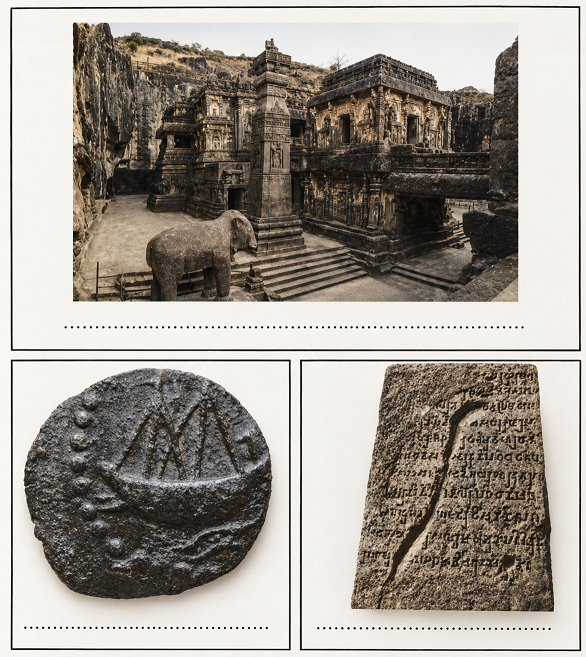
| Picture Reference | Object Displayed | Determined Class of Source |
|---|---|---|
| Picture 1 | Ancient temple or structure | Material Source |
| Picture 2 | Old coin | Material Source |
| Picture 3 | Inscription | Written Source |
📖 Textbook Question
✅ Answer
Written sources: Sources available in written form are called written sources. They provide information about the language, script, culture, political policies, social structure and religious or social ideas of a period.
Oral sources: Information passed by word of mouth is called an oral source. It is preserved in the shared memory of society and passed from one generation to another. Folktales, myths, Ovi, Povada, proverbs and folk songs are oral sources.
📖 Textbook Question
✅ Answer
Material sources include inscriptions, copper plates, old coins, seals, weapons, pottery, stone and metal sculptures, ancient buildings, forts, temples and old water structures.
- Food grains, fruit seeds and animal bones reveal people’s food habits.
- Inscriptions provide information about administration, religion and social life.
- Weapons, forts and palaces reveal defence systems, war strategies and architectural styles.
- Coins and seals reveal the economy, names of rulers, religious traditions and artistic trends.
- Other objects reveal the culture, traditions, games, art and scientific knowledge of people.
Thus, material sources are very important for understanding human life during a particular period.
📖 Textbook Question
✅ Answer
Government records, laws, census records, newspapers, books, research papers, photographs, maps, audio recordings, videos, films and digital records will help future generations reconstruct the history of modern times.
Modern coins, currency notes, tools, machines, buildings, clothes and household objects will provide information about our economy, technology and daily life. Interviews, memories and folk songs will serve as oral sources.
These sources will help future historians understand our government, society, culture, education, technology and way of living.
📖 Textbook Question
✅ Answer
Old objects help us understand how human life, skills, beliefs and needs changed over time.
| Old Object | Information Obtained |
|---|---|
| Idols | Religious beliefs, sculpture, art and skills of craftspeople. |
| Seals | Administration, ownership, trade, symbols and official authority. |
| Coins | Economy, rulers, trade, religious traditions and artistic trends. |
| Utensils | Food habits, cooking methods, available materials and daily life. |
| Jewellery | Ornaments, metals, artistic skills and economic conditions. |
| Documents | Language, script, laws, administration, events and social life. |
| Toys | Children’s games, entertainment, art and materials used during a period. |
By comparing these objects from different periods, historians understand changes in food, clothing, art, technology, trade, beliefs and ways of living.
📖 Textbook Question
✅ Answer
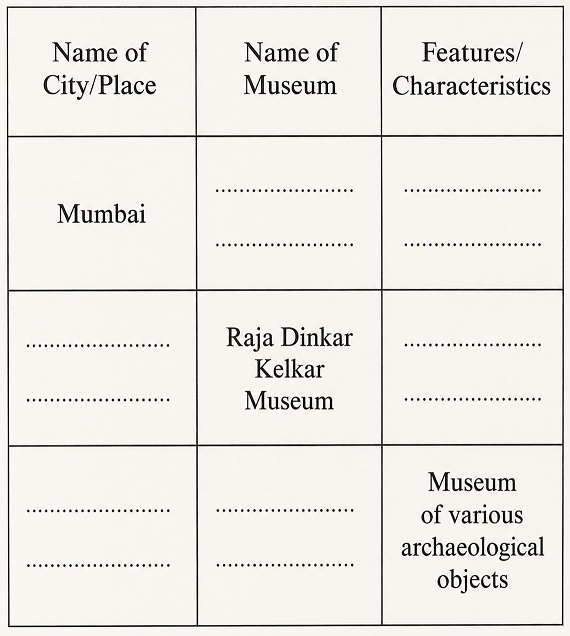
| Name of City/Place | Name of Museum | Features/Characteristics |
|---|---|---|
| Mumbai | Chhatrapati Shivaji Maharaj Vastu Sangrahalaya | A vast collection of artefacts related to the history of India. |
| Pune | Raja Dinkar Kelkar Museum | Household objects, jewellery, weapons, musical instruments, textiles and artworks. |
| Pune | Museum at Deccan College Post-Graduate and Research Institute | A museum containing various archaeological objects. |
📖 Textbook Question
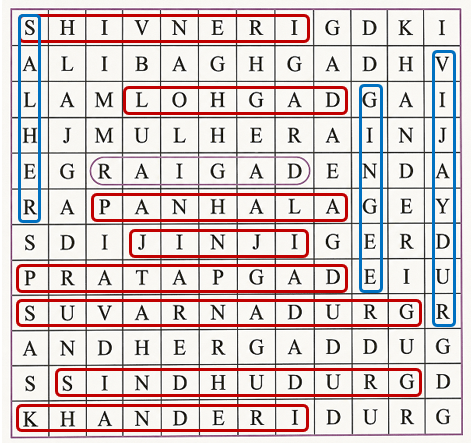
✅ Correct Answer
📖 Textbook Activity
✅ Suggested Presentation Outline
- Collect a folk song connected with a local festival.
- Collect a folktale about local culture or tradition.
- Select a Povada describing bravery or a historical event.
- Select a Bharud that gives a social or moral message.
- Select an Ovi connected with household work or social life.
- Explain how these oral traditions preserve history and culture.
The presentation can begin with the meaning of oral sources, followed by the selected examples and a short explanation of their cultural importance.
📖 Textbook Activity
✅ Suggested Heritage Wall Layout
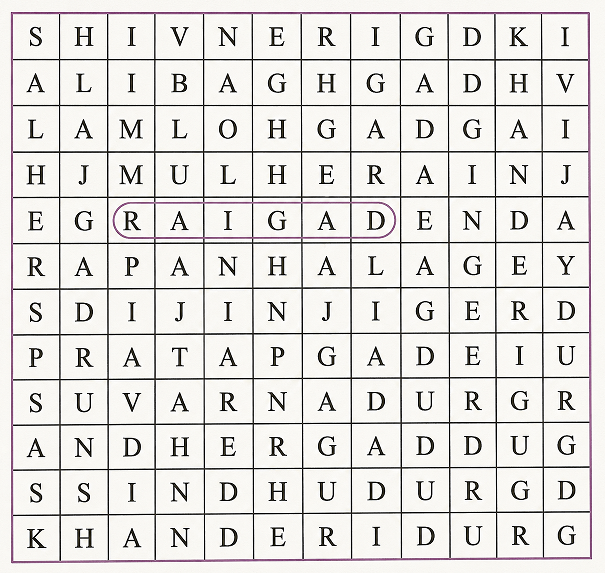
Prepare a chart titled “Heritage Sites in Maharashtra” using standard documentation metrics for:
- Ajanta Caves
- Verul or Ellora Caves
- Gharapuri or Elephanta Caves
- Kanheri Caves
- Chhatrapati Shivaji Maharaj Terminus
- Western Ghats
- Raigad Fort
- Shivneri Fort
- Pratapgad Fort
- Sindhudurg Fort
Arrange these pictures neatly on a chart board with short labels explaining their historical value to create your Heritage Wall.
📖 Textbook Project
✅ Suggested Project Report Outline
Report Title: Visit to a Local Museum
- Introduction: Name of the museum, location, date of visit and purpose of the visit.
- Sections inside the Museum: Different rooms or galleries like ancient coins, weapons, clothing, tools, paintings or inscriptions.
- Key Artefacts observed: Description of two or three special items, their estimated period, materials used and historical meaning.
- Information Gathering: Information collected from labels, brochures or conversations with the museum guide.
- Conclusion: Your personal thoughts on how the visit helped you understand local history better and the value of preserving old objects.
please share class 6th civics chapter 1
Sure!
Please share the notes of Ls.3 Harappan Civilization
Sure! and very soon