
Meet Your New Coaching Class Manager
Manage Students, Attendance, Fees, Reports & WhatsApp — all in one powerful and easy-to-use app.
Our Social Life
1.2 Social Institutions and their Functions
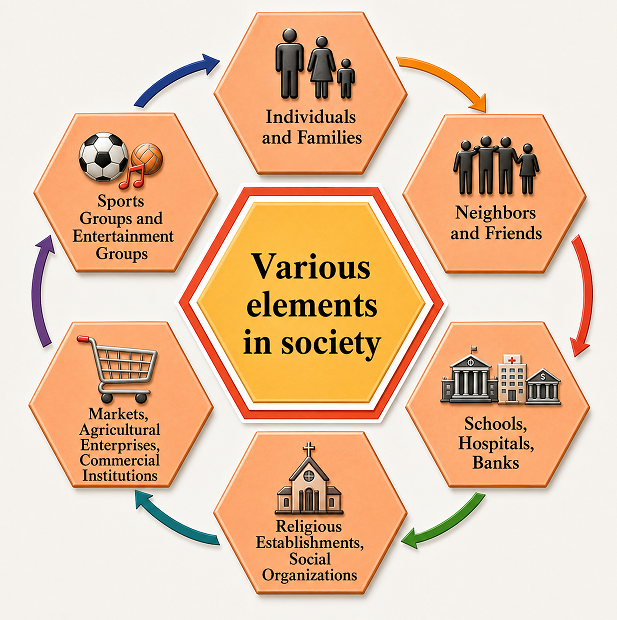
🔍 Understanding the Diagram
🖼️ Simple Explanation
The diagram shows different people, groups and institutions that together form society.
It includes individuals and families, neighbours and friends, schools, hospitals, banks, religious establishments, social organisations, markets, agricultural enterprises, commercial institutions, sports groups and entertainment groups.
The arrows show that all these elements are connected. They perform different functions and help society operate properly.
📚 Meanings
| Meanings | मराठी अर्थ | हिंदी अर्थ |
|---|---|---|
| Elements – important parts of something | घटक – एखाद्या गोष्टीचे महत्त्वाचे भाग | तत्त्व – किसी वस्तु या व्यवस्था के महत्त्वपूर्ण भाग |
| Individuals – separate persons | व्यक्ती – प्रत्येक स्वतंत्र माणूस | व्यक्ति – प्रत्येक अलग इंसान |
| Institutions – organised systems serving society | संस्था – समाजासाठी काम करणाऱ्या संघटित व्यवस्था | संस्थाएँ – समाज के लिए कार्य करने वाली संगठित व्यवस्थाएँ |
| Establishments – organised places or organisations | आस्थापना – संघटित ठिकाणे किंवा संस्था | प्रतिष्ठान – संगठित स्थान या संस्था |
| Social organisations – organised groups working in society | सामाजिक संघटना – समाजात काम करणारे संघटित गट | सामाजिक संगठन – समाज में कार्य करने वाले संगठित समूह |
| Agricultural enterprises – organised work related to farming | कृषी उद्योग – शेतीशी संबंधित संघटित व्यवसाय | कृषि उद्यम – खेती से जुड़े संगठित व्यवसाय |
| Commercial institutions – organisations connected with business | व्यापारी संस्था – व्यवसायाशी संबंधित संस्था | व्यावसायिक संस्थाएँ – व्यापार से संबंधित संस्थाएँ |
| Entertainment groups – groups providing recreation | मनोरंजन गट – विरंगुळा देणारे समूह | मनोरंजन समूह – मनोरंजन प्रदान करने वाले समूह |
💡 Useful Information
Society is made up of many connected elements. Every element has a different place and function within society.
🎯 Clear Concept
Families, social groups and institutions are interconnected parts of society.1.2 Social Institutions and their Functions
📖 Textbook Paragraph
🌟 Simple Explanation
The family, schools, colleges and religious organisations are examples of social institutions.
These institutions help fulfil the basic social needs of the community. They teach people good values and proper behaviour.
They also give emotional support and help maintain discipline in society. In this way, social institutions help people and communities function properly.
📚 Meanings
| Meanings | मराठी अर्थ | हिंदी अर्थ |
|---|---|---|
| Recognized – accepted or identified | मान्यता दिलेली – स्वीकारलेली किंवा ओळखलेली | मान्यता प्राप्त – स्वीकार या पहचान किया गया |
| Primary function – most important work | प्राथमिक कार्य – सर्वांत महत्त्वाचे काम | प्रमुख कार्य – सबसे महत्त्वपूर्ण काम |
| Fulfil – meet or satisfy | पूर्ण करणे – गरज भागवणे | पूरा करना – आवश्यकता पूरी करना |
| Fundamental – basic and necessary | मूलभूत – अत्यावश्यक आणि प्राथमिक | मूलभूत – बुनियादी और आवश्यक |
| Community – people living or connected together | समुदाय – एकत्र राहणारे किंवा जोडलेले लोक | समुदाय – साथ रहने या जुड़े हुए लोग |
| Principal role – main responsibility | प्रमुख भूमिका – मुख्य जबाबदारी | प्रमुख भूमिका – मुख्य जिम्मेदारी |
| Imparting – giving or teaching | प्रदान करणे – देणे किंवा शिकवणे | प्रदान करना – देना या सिखाना |
| Positive values – good principles | सकारात्मक मूल्ये – चांगली तत्त्वे | सकारात्मक मूल्य – अच्छे सिद्धांत |
| Emotional support – help related to feelings | भावनिक आधार – भावनांशी संबंधित मदत | भावनात्मक सहारा – भावनाओं से जुड़ी सहायता |
| Discipline – following rules and proper behaviour | शिस्त – नियम पाळून योग्य वागणे | अनुशासन – नियम मानकर उचित व्यवहार करना |
💡 Useful Information
A social institution is an organised system that performs an important function for people and society.
🎯 Clear Concept
Social institutions fulfil social needs, teach values, provide support and maintain discipline.🧠 Development of Independent Thinking
📖 Textbook Paragraph
🌟 Simple Explanation
Every person has the ability to think independently. However, this ability also develops through interaction with other people.
Family members, neighbours, relatives, friends and teachers help a person learn, think and make decisions.
Radio, newspapers, television, films, plays, the internet, social organisations and religious institutions also influence a person’s thoughts and personality.
Independent thinking creates different preferences and choices. Therefore, students living in the same place or studying in the same school may have different talents and interests.
Because their talents are different, they may choose very different fields of work in the future.
📚 Meanings
| Meanings | मराठी अर्थ | हिंदी अर्थ |
|---|---|---|
| Possesses – has or owns | असणे – स्वतःजवळ असणे | रखता है – अपने पास होना |
| Capacity – ability to do something | क्षमता – एखादी गोष्ट करण्याची ताकद | क्षमता – कोई काम करने की योग्यता |
| Independent thinking – forming one’s own thoughts | स्वतंत्र विचार – स्वतःचे विचार तयार करण्याची क्षमता | स्वतंत्र चिंतन – अपने विचार स्वयं बनाने की क्षमता |
| Significant role – an important part or responsibility | महत्त्वपूर्ण भूमिका – महत्त्वाचे कार्य | महत्त्वपूर्ण भूमिका – जरूरी कार्य |
| Personality – qualities that make a person different | व्यक्तिमत्त्व – व्यक्तीची ओळख निर्माण करणारे गुण | व्यक्तित्व – व्यक्ति की पहचान बनाने वाले गुण |
| Continuously – without stopping | सतत – न थांबता | लगातार – बिना रुके |
| Shaped – influenced and developed | घडवलेले – प्रभावामुळे विकसित झालेले | आकार दिया गया – प्रभाव से विकसित किया गया |
| Broadcasting services – services providing radio or television programmes | प्रसारण सेवा – रेडिओ किंवा दूरदर्शन कार्यक्रम देणाऱ्या सेवा | प्रसारण सेवाएँ – रेडियो या टेलीविजन कार्यक्रम देने वाली सेवाएँ |
| Diverse – of many different kinds | विविध – अनेक वेगवेगळ्या प्रकारचे | विविध – कई अलग-अलग प्रकार के |
| Preferences – things a person likes more | पसंती – व्यक्तीला अधिक आवडणाऱ्या गोष्टी | पसंद – व्यक्ति को अधिक अच्छी लगने वाली चीजें |
| Locality – a particular area | परिसर – विशिष्ट भाग | इलाका – कोई विशेष क्षेत्र |
| Artistic talents – special abilities in art | कलात्मक गुण – कलेतील विशेष क्षमता | कलात्मक प्रतिभाएँ – कला की विशेष योग्यताएँ |
💡 Useful Information
People receive similar opportunities, but they may develop different interests because every person thinks and responds differently.
🎯 Clear Concept
Society influences our development, but independent thinking gives people different talents, interests and choices.🏫 The School: A Vital Social Institution
📖 Textbook Paragraph
🌟 Simple Explanation
School is an important social institution created by society.
At school, students learn different subjects and gain knowledge. They also learn discipline, cooperation, good values and teamwork.
School helps students discover and develop their artistic talents. It prepares them to live and work with others.
Therefore, school connects a student’s personal life with the wider needs of society.
📚 Meanings
| Meanings | मराठी अर्थ | हिंदी अर्थ |
|---|---|---|
| Vital – extremely important | अत्यावश्यक – खूप महत्त्वाचे | अत्यंत आवश्यक – बहुत महत्त्वपूर्ण |
| Fundamental – basic and necessary | मूलभूत – प्राथमिक आणि आवश्यक | मूलभूत – बुनियादी और आवश्यक |
| Medium – a way through which something is done | माध्यम – काम पूर्ण करण्याचा मार्ग | माध्यम – कार्य करने का तरीका |
| Essential values – necessary good principles | आवश्यक मूल्ये – गरजेची चांगली तत्त्वे | आवश्यक मूल्य – जरूरी अच्छे सिद्धांत |
| Cooperation – working together and helping | सहकार्य – एकत्र काम करणे आणि मदत करणे | सहयोग – मिलकर काम और सहायता करना |
| Nurturing – helping something grow and develop | जोपासना – वाढ आणि विकास करण्यास मदत करणे | विकसित करना – बढ़ने और आगे जाने में सहायता करना |
| Teamwork – people working together as a team | संघकार्य – गटाने एकत्र काम करणे | सामूहिक कार्य – दल के रूप में मिलकर काम करना |
| Crucial link – a very important connection | महत्त्वाचा दुवा – अत्यंत महत्त्वाची जोडणी | महत्त्वपूर्ण कड़ी – बहुत जरूरी संबंध |
| Broader social need – a need of the wider society | व्यापक सामाजिक गरज – मोठ्या समाजाची गरज | व्यापक सामाजिक आवश्यकता – बड़े समाज की जरूरत |
💡 Useful Information
School gives academic knowledge and also teaches students how to behave, cooperate and participate responsibly in society.
🎯 Clear Concept
School develops knowledge, discipline, values, talents and teamwork, connecting students with society.✏️ Let’s Do It.
❓ Question 1
🌟 Simple Explanation of Question 1
Talk to your friends and find out their artistic talents and interests. Then arrange the information in a list.
✅ Suggested Sample Answer
| Friend | Artistic Talent | Interest |
|---|---|---|
| Friend A | Drawing and painting | Nature and design |
| Friend B | Singing | Music |
| Friend C | Acting | Drama |
| Friend D | Creative writing | Stories and reading |
| Friend E | Dancing | Performing arts |
Note: Students must replace the sample entries with information about their own friends.
❓ Question 2
Replace the short beginning-and-ending words above with the complete textbook question.
🌟 Simple Explanation of Question 2
Ask your friends what work or profession they would like to choose in the future. Present their answers in a chart.
📚 Meanings
| Meanings | मराठी अर्थ | हिंदी अर्थ |
|---|---|---|
| Artistic – connected with art | कलात्मक – कलेशी संबंधित | कलात्मक – कला से संबंधित |
| Talents – special natural abilities | गुण – विशेष नैसर्गिक क्षमता | प्रतिभाएँ – विशेष प्राकृतिक योग्यताएँ |
| Interests – activities or subjects someone likes | आवडी – व्यक्तीला आवडणाऱ्या गोष्टी | रुचियाँ – व्यक्ति को पसंद आने वाली चीजें |
| Possess – have | असणे – जवळ असणे | होना – अपने पास रखना |
| Discussing – talking about something together | चर्चा करणे – एखाद्या विषयावर एकत्र बोलणे | चर्चा करना – किसी विषय पर मिलकर बात करना |
✅ Suggested Sample Chart
| Friend | Talent or Interest | Would Like to Become |
|---|---|---|
| Friend A | Drawing | Artist |
| Friend B | Music | Music teacher |
| Friend C | Science | Scientist |
| Friend D | Helping others | Doctor |
| Friend E | Teaching | Teacher |
Note: This is a sample. Students should prepare the final chart after talking to their friends.
1.2.1 Interdependence within Society
📖 Textbook Paragraph
1) Engaging in agriculture to ensure the supply of food.
2) Making tools and livestock available for farming.
3) Providing seeds and saplings.
Replace the short beginning-and-ending words above with the complete textbook paragraph and numbered examples.
🌟 Simple Explanation
In the beginning, food and shelter were the main needs of humans. When people began living in families, clothing also became an important need.
No single person could fulfil every need alone. Society therefore developed systems through which people performed different tasks and helped one another.
- Some people practise agriculture to produce and supply food.
- Some people make farming tools and provide livestock needed for agricultural work.
- Some people provide seeds and young plants called saplings.
These examples show that people depend on the work and services of other people. This is called interdependence.
📚 Meanings
| Meanings | मराठी अर्थ | हिंदी अर्थ |
|---|---|---|
| Interdependence – depending on one another | परस्परावलंबन – एकमेकांवर अवलंबून असणे | परस्पर निर्भरता – एक-दूसरे पर निर्भर होना |
| Initially – in the beginning | सुरुवातीला – आरंभी | आरंभ में – शुरुआत में |
| Fundamental needs – basic necessary needs | मूलभूत गरजा – जगण्यासाठी आवश्यक गरजा | मूलभूत आवश्यकताएँ – जीवन के लिए जरूरी जरूरतें |
| Emerge – begin to appear | निर्माण होणे – दिसू किंवा सुरू होणे | उत्पन्न होना – दिखाई या शुरू होना |
| Responsibility – duty to do something | जबाबदारी – पूर्ण करायचे कर्तव्य | जिम्मेदारी – पूरा किया जाने वाला कर्तव्य |
| Establish – create or set up | स्थापन करणे – निर्माण करणे | स्थापित करना – बनाना या शुरू करना |
| Engaging in agriculture – doing farming work | शेती करणे – कृषी कामात भाग घेणे | कृषि करना – खेती के काम में लगना |
| Ensure – make certain | खात्री करणे – निश्चित करणे | सुनिश्चित करना – पक्का करना |
| Supply – provide what is needed | पुरवठा – आवश्यक वस्तू उपलब्ध करून देणे | आपूर्ति – जरूरी वस्तु उपलब्ध कराना |
| Livestock – farm animals | पशुधन – शेतीसाठी पाळले जाणारे प्राणी | पशुधन – खेती के लिए पाले जाने वाले पशु |
| Saplings – young plants | रोपे – लहान वाढणारी झाडे | पौधे – छोटे उगते हुए पेड़-पौधे |
💡 Useful Information
Interdependence exists because people perform different kinds of work. The work of one person helps meet the needs of many other people.
🎯 Clear Concept
People in society depend on one another to obtain food, clothing, shelter, tools and other necessary goods and services.📗 Key Definition: Society
📖 Textbook Paragraph
🌟 Simple Explanation
Society is formed by different groups of people living in a particular region. They have their own rules of behaviour and some shared ways of looking at life.
📚 Meanings
| Meanings | मराठी अर्थ | हिंदी अर्थ |
|---|---|---|
| Aggregate – a collection of different groups | एकत्रित समूह – अनेक गटांचा मिळून बनलेला समूह | समूह – अनेक समूहों से बना बड़ा समूह |
| Residing – living in a place | राहणारे – एखाद्या ठिकाणी वास्तव्य करणारे | निवास करना – किसी स्थान पर रहना |
| Specific region – a particular area | विशिष्ट प्रदेश – ठरावीक क्षेत्र | विशिष्ट क्षेत्र – कोई निश्चित इलाका |
| Codes of conduct – accepted rules of behaviour | आचारसंहिता – वर्तनाचे मान्य नियम | आचार-संहिता – व्यवहार के स्वीकृत नियम |
| Shared outlook – a common way of thinking | सामायिक दृष्टिकोन – विचार करण्याची समान पद्धत | साझा दृष्टिकोण – सोचने का समान तरीका |
💡 Useful Information
A society contains different human groups, but they are connected through their region, relationships and shared ways of life.
🎯 Clear Concept
Society is a collection of connected human groups living in a region with shared rules and outlooks.🏛️ Key Definition: Social Institutions
📖 Textbook Paragraph
🌟 Simple Explanation
A social institution is an organised pattern of human behaviour created to perform an important social function.
Marriage, the family, educational establishments and the caste system are examples mentioned in the textbook.
📚 Meanings
| Meanings | मराठी अर्थ | हिंदी अर्थ |
|---|---|---|
| Organized form – a properly arranged system | संघटित स्वरूप – योग्य प्रकारे मांडलेली व्यवस्था | संगठित रूप – ठीक प्रकार से व्यवस्थित व्यवस्था |
| Human behaviour – the way people act | मानवी वर्तन – लोकांच्या वागण्याची पद्धत | मानवीय व्यवहार – लोगों के कार्य करने का तरीका |
| Directed toward – intended for a purpose | उद्देशाने केलेले – एखाद्या हेतूसाठी असलेले | उद्देश्य की ओर – किसी मकसद के लिए किया गया |
| Social functions – important work performed for society | सामाजिक कार्ये – समाजासाठी केली जाणारी महत्त्वाची कामे | सामाजिक कार्य – समाज के लिए किए जाने वाले महत्त्वपूर्ण काम |
| Educational establishments – organised places of education | शैक्षणिक संस्था – शिक्षण देणाऱ्या संघटित संस्था | शैक्षणिक संस्थान – शिक्षा प्रदान करने वाली संस्थाएँ |
💡 Useful Information
Social institutions organise important areas of social life and help people follow accepted patterns of behaviour.
🎯 Clear Concept
A social institution is an organised system created to fulfil an important function in society.🧩 Key Definition: Components of Society
📖 Textbook Paragraph
🌟 Simple Explanation
Society has many connected components. These include individuals, families, groups, culture, social rules, values, relationships and social institutions.
All these components work together and form society.
📚 Meanings
| Meanings | मराठी अर्थ | हिंदी अर्थ |
|---|---|---|
| Components – parts that form something | घटक – एखादी गोष्ट तयार करणारे भाग | घटक – किसी वस्तु को बनाने वाले भाग |
| Culture – a group’s way of life | संस्कृती – समाजाची जीवनपद्धती | संस्कृति – समाज का जीवन-तरीका |
| Social norms – accepted rules of behaviour | सामाजिक नियम – समाजाने स्वीकारलेले वर्तनाचे नियम | सामाजिक मानदंड – समाज द्वारा स्वीकार किए गए व्यवहार के नियम |
| Values – principles about good and proper behaviour | मूल्ये – योग्य वर्तनाबद्दलची तत्त्वे | मूल्य – अच्छे और उचित व्यवहार के सिद्धांत |
| Constitute – combine to form something | तयार करणे – एकत्र येऊन निर्माण करणे | निर्माण करना – मिलकर किसी चीज को बनाना |
💡 Useful Information
No single component forms society by itself. Society is created through the connection of people, groups, culture, rules, values, relationships and institutions.