
GRADE 6 • HISTORY • SSC MAHARASHTRA STATE BOARD
Chapter 2: Prehistoric Period
Page 10 — Easy Page-wise Explanation
🌍 2.1 Ancient India – Geographical Background
📜 Textbook Paragraph
🌟 Simple Explanation
- The previous page explained that North and South India have different climates.
- These climatic and geographical differences affect the methods used for agriculture.
- They affect the kinds of crops grown in different regions.
- They also cause people in different places to develop different ways of life.
| Meanings | मराठी अर्थ | हिंदी अर्थ |
|---|---|---|
| Agricultural practices – methods used for farming. | शेतीच्या पद्धती – शेती करण्यासाठी वापरल्या जाणाऱ्या पद्धती. | कृषि पद्धतियाँ – खेती करने के लिए उपयोग की जाने वाली विधियाँ. |
| Crops – plants grown by farmers for food or other uses. | पिके – अन्न किंवा इतर उपयोगांसाठी शेतात वाढवलेली झाडे. | फसलें – भोजन या अन्य उपयोग के लिए खेतों में उगाए गए पौधे. |
| Lifestyles – the ways in which people live. | जीवनशैली – लोकांचे जगण्याचे मार्ग. | जीवनशैली – लोगों के जीवन जीने के तरीके. |
🎯 Clear Concept
Geographical diversity creates differences in agriculture, crops and human lifestyles.
📜 Agriculture in Ancient India
🌟 Simple Explanation
- Agriculture developed successfully in ancient India.
- It developed well in places that had fertile sedimentary soil.
- Fertile soil contains suitable conditions for growing crops.
- Central India has a very large plateau region.
- The Ganga and Yamuna rivers form a fertile delta region.
- The Central Indian plateau and Ganga-Yamuna delta were among India’s most fertile agricultural regions.
| Meanings | मराठी अर्थ | हिंदी अर्थ |
|---|---|---|
| Flourished – developed successfully and strongly. | भरभराट झाली – यशस्वीपणे आणि मोठ्या प्रमाणात विकास झाला. | फलती-फूलती रही – सफलतापूर्वक और अच्छी तरह विकसित हुई. |
| Fertile – good for growing crops. | सुपीक – पिके वाढण्यासाठी योग्य. | उपजाऊ – फसल उगाने के लिए अच्छी. |
| Sedimentary soils – soils formed from materials deposited in layers. | गाळाची माती – थरांमध्ये साचलेल्या पदार्थांपासून तयार झालेली माती. | तलछटी मिट्टी – परतों में जमा पदार्थों से बनी मिट्टी. |
| Plateau – a large raised area of mostly flat land. | पठार – उंचावलेला व बहुतांश सपाट भूभाग. | पठार – ऊँचा और अधिकतर समतल भूभाग. |
| Delta – fertile land formed near the mouth of a river. | त्रिभुज प्रदेश – नदीच्या मुखाजवळ तयार झालेला सुपीक भूभाग. | डेल्टा – नदी के मुहाने के पास बनी उपजाऊ भूमि. |
💡 Useful Information
Fertile soil and river regions supported the growth of agriculture in ancient India.
🎯 Clear Concept
Agriculture flourished mainly in India’s fertile plateau and river-delta regions.
📜 The Deccan Plateau and Chalcolithic Settlements
🌟 Simple Explanation
- The Deccan Plateau has very fertile black soil.
- Chalcolithic cultures developed in this fertile region.
- The Godavari and Krishna rivers flow through the region.
- The smaller rivers that join them are called tributaries.
- These rivers provided support for the establishment of Chalcolithic settlements.
- They also supported agriculture and an agrarian way of life in ancient Maharashtra.
| Meanings | मराठी अर्थ | हिंदी अर्थ |
|---|---|---|
| Chalcolithic cultures – cultures of a period when stone and copper were used. | ताम्रपाषाण संस्कृती – दगड आणि तांबे वापरले जात असलेल्या काळातील संस्कृती. | ताम्रपाषाण संस्कृतियाँ – उस काल की संस्कृतियाँ जब पत्थर और ताँबे का उपयोग होता था. |
| Tributaries – smaller rivers that flow into a larger river. | उपनद्या – मोठ्या नदीला मिळणाऱ्या लहान नद्या. | सहायक नदियाँ – बड़ी नदी में मिलने वाली छोटी नदियाँ. |
| Boost – help something grow or develop. | चालना – वाढ किंवा विकास होण्यास मदत. | बढ़ावा – वृद्धि या विकास में सहायता. |
| Agrarian lifestyle – a way of life based mainly on farming. | कृषिप्रधान जीवनशैली – मुख्यतः शेतीवर आधारित जीवनपद्धती. | कृषि-आधारित जीवनशैली – मुख्य रूप से खेती पर आधारित जीवन. |
💡 Useful Information
Fertile black soil and rivers made the Deccan Plateau suitable for settlements and agriculture.
🎯 Clear Concept
The soil and rivers of the Deccan Plateau helped Chalcolithic culture and agricultural life develop in ancient Maharashtra.
📜 Sea Trade and Cultural Contact
🌟 Simple Explanation
- The Arabian Sea lies to the west of India.
- The Bay of Bengal lies to the east of India.
- Because India has seas on both sides, sea trade developed from ancient times.
- Sea routes allowed Indians to make contact with distant regions.
- This contact also connected Indians with different cultures.
| Meanings | मराठी अर्थ | हिंदी अर्थ |
|---|---|---|
| Sea trade – buying, selling and transporting goods by sea routes. | सागरी व्यापार – समुद्री मार्गाने वस्तूंची खरेदी, विक्री आणि वाहतूक. | समुद्री व्यापार – समुद्री मार्ग से वस्तुओं की खरीद, बिक्री और परिवहन. |
| Prospered – grew and became successful. | भरभराट झाली – वाढ झाली आणि यश मिळाले. | समृद्ध हुआ – बढ़ा और सफल हुआ. |
| Distant regions – places located far away. | दूरचे प्रदेश – खूप अंतरावर असलेले भाग. | दूर के क्षेत्र – बहुत दूर स्थित स्थान. |
🎯 Clear Concept
India’s seas supported trade and contact with distant regions and cultures.
📜 Result of Geographical Diversity
🌟 Simple Explanation
- India has many different natural and geographical features.
- People living in different regions developed different cultures.
- They also developed different traditions and ways of life.
- Therefore, geographical diversity created cultural diversity within India.
| Meanings | मराठी अर्थ | हिंदी अर्थ |
|---|---|---|
| Gave rise to – caused something to begin or develop. | निर्माण केले – एखादी गोष्ट सुरू किंवा विकसित होण्यास कारणीभूत ठरले. | जन्म दिया – किसी चीज के आरम्भ या विकास का कारण बना. |
| Traditions – beliefs and customs followed for a long time. | परंपरा – दीर्घकाळ पाळल्या जाणाऱ्या प्रथा आणि विश्वास. | परंपराएँ – लंबे समय से मानी जाने वाली प्रथाएँ और विश्वास. |
🎯 Clear Concept
India’s geographical diversity helped create many cultures, traditions and lifestyles.
⏳ 2.2 Prehistoric Period
📜 Human Evolution
🌟 Simple Explanation
- Students studied human evolution in the previous year.
- Human beings did not develop suddenly in their present form.
- Humans gradually developed over a very long period.
- The textbook connects this gradual development with certain ape species.
| Meanings | मराठी अर्थ | हिंदी अर्थ |
|---|---|---|
| Gradually – slowly, step by step. | हळूहळू – टप्प्याटप्प्याने आणि सावकाश. | धीरे-धीरे – क्रमशः और चरणों में. |
| Evolved – developed slowly over a long period. | उत्क्रांत झाले – दीर्घ काळात हळूहळू विकसित झाले. | विकसित हुए – लंबे समय में धीरे-धीरे विकास हुआ. |
| Species – a group of similar living beings. | प्रजाती – एकसारख्या सजीवांचा समूह. | प्रजाति – समान प्रकार के जीवों का समूह. |
🎯 Clear Concept
Human evolution was a gradual process that took place over a very long period.
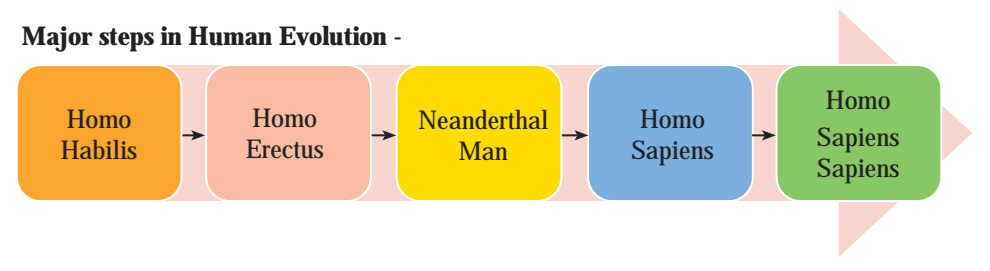
🧬 Explanation of the Human-Evolution Diagram
🌟 Simple Explanation
The diagram presents the major steps of human evolution in sequence. The arrows show movement from one stage to the next.
| Meanings | मराठी अर्थ | हिंदी अर्थ |
|---|---|---|
| Major steps – the main stages in a process. | प्रमुख टप्पे – एखाद्या प्रक्रियेतील मुख्य पायऱ्या. | प्रमुख चरण – किसी प्रक्रिया के मुख्य पड़ाव. |
| Human evolution – the gradual development of humans over a long period. | मानवी उत्क्रांती – दीर्घ काळात मानवाचा झालेला हळूहळू विकास. | मानव विकास – लंबे समय में मनुष्य का धीरे-धीरे हुआ विकास. |
💡 Useful Information
The arrows should be read from left to right. They show the order of the stages given in the textbook diagram.
🎯 Clear Concept
Human evolution took place gradually through several major stages.
Replace the short beginning-and-ending words above with the complete textbook passage.
🌟 Simple Explanation
- A myth tells about a mysterious, large and hairy creature believed to exist in the Himalayas.
- This creature is called the Yeti.
- It is also known as the “fearsome snowman.”
- People have sometimes reported seeing large footprints in the Himalayan region.
- However, research suggests that these footprints may belong to Himalayan bears or other animals.
- Anthropologists study myths like this because myths provide information about culture and traditions.
- Such myths also show how people use their imagination.
| Meanings | मराठी अर्थ | हिंदी अर्थ |
|---|---|---|
| Myth – an old traditional story or belief. | दंतकथा – जुनी पारंपरिक कथा किंवा समजूत. | मिथक – पुरानी पारंपरिक कथा या मान्यता. |
| Mysterious – difficult to understand or explain. | रहस्यमय – समजण्यास किंवा स्पष्ट करण्यास कठीण. | रहस्यमय – जिसे समझना या समझाना कठिन हो. |
| Creature – a living being or animal. | जीव – सजीव किंवा प्राणी. | जीव – कोई जीवित प्राणी. |
| Fearsome – causing fear. | भीतीदायक – भीती वाटण्यास कारणीभूत. | डरावना – भय उत्पन्न करने वाला. |
| Footprints – marks left by feet on the ground. | पावलांचे ठसे – जमिनीवर उमटलेल्या पावलांच्या खुणा. | पैरों के निशान – जमीन पर बने पैरों के चिह्न. |
| Anthropologists – people who study humans and human cultures. | मानववंशशास्त्रज्ञ – मानव आणि मानवी संस्कृतींचा अभ्यास करणारे तज्ज्ञ. | मानवविज्ञानी – मनुष्य और मानव संस्कृतियों का अध्ययन करने वाले विशेषज्ञ. |
| Human imagination – the human ability to form ideas and pictures in the mind. | मानवी कल्पनाशक्ती – मनात विचार आणि चित्रे तयार करण्याची मानवी क्षमता. | मानवीय कल्पना – मन में विचार और चित्र बनाने की मानव क्षमता. |
💡 Useful Information
A myth is a traditional story or belief. Researchers examine available evidence before deciding whether a claim has a natural explanation.
🎯 Clear Concept
The Yeti is described in a Himalayan myth, while research suggests that the reported footprints may belong to bears or other animals.
⏳ 2.2 Prehistoric Period
📜 Life of Early Humans
Replace the short beginning-and-ending words above with the complete textbook paragraph.
🌟 Simple Explanation
- The life of early humans was extremely difficult.
- They could not remain permanently in one place.
- They had to keep moving in search of food and water.
- They collected roots and fruits for food.
- They also hunted animals.
- They made their tools from available materials such as wood, stone and bone.
- Primitive humans probably did not use a developed spoken language.
- They may have communicated by using hand and body gestures.
- They may also have used different sounds and facial expressions.
| Meanings | मराठी अर्थ | हिंदी अर्थ |
|---|---|---|
| Continuously wander – to keep moving from place to place. | सतत भटकणे – एका ठिकाणाहून दुसऱ्या ठिकाणी फिरत राहणे. | लगातार भटकना – एक स्थान से दूसरे स्थान पर घूमते रहना. |
| Gather – to collect things together. | गोळा करणे – वस्तू एकत्र जमा करणे. | इकट्ठा करना – वस्तुओं को एक साथ जमा करना. |
| Crafted – carefully made by hand. | घडवलेले – हाताने काळजीपूर्वक तयार केलेले. | बनाए गए – हाथ से सावधानीपूर्वक तैयार किए गए. |
| Primitive humans – humans from the earliest stages of development. | आदिम मानव – मानवी विकासाच्या सुरुवातीच्या टप्प्यातील मानव. | आदिम मानव – मानव विकास के आरम्भिक चरण के मनुष्य. |
| Gestures – movements of hands or body used to communicate. | हावभाव – संवादासाठी केलेल्या हातांच्या किंवा शरीराच्या हालचाली. | इशारे – संवाद के लिए हाथ या शरीर की गतिविधियाँ. |
| Facial expressions – feelings or messages shown through the face. | चेहऱ्यावरील भाव – चेहऱ्याद्वारे दाखवलेल्या भावना किंवा संदेश. | चेहरे के भाव – चेहरे द्वारा दिखाई गई भावनाएँ या संदेश. |
🎯 Clear Concept
Early humans wandered for food and water, made tools from natural materials and probably communicated through sounds, gestures and facial expressions.
📜 Meaning and Evidence of the Prehistoric Period
Replace the short beginning-and-ending words above with the complete textbook paragraph.
🌟 Simple Explanation
- This early period of human life is called the Prehistoric Period.
- Students learnt about this period in the previous lesson.
- Scripts or systems of writing were not used during this period.
- Therefore, it is called the Prehistoric Period.
- Even without scripts, humans made remarkable progress.
- Researchers study objects left by early humans to understand their lives.
- Stone tools and bones provide important evidence.
- Pottery and cave paintings are also major sources of information.
- These sources help us learn how early humans lived.
- As time passed, their tools gradually changed.
- Their lifestyles and food habits also changed.
- The ways in which they formed and organised settlements changed gradually.
| Meanings | मराठी अर्थ | हिंदी अर्थ |
|---|---|---|
| Prehistoric Period – the period before scripts or written records were used. | प्रागैतिहासिक काळ – लिपी किंवा लिखित नोंदी वापरण्यापूर्वीचा काळ. | प्रागैतिहासिक काल – लिपि या लिखित अभिलेखों के उपयोग से पहले का समय. |
| Scripts – systems of written letters or symbols. | लिपी – अक्षरे किंवा चिन्हे लिहिण्याची पद्धत. | लिपियाँ – अक्षर या चिन्ह लिखने की प्रणाली. |
| Remarkable progress – important and noticeable development. | उल्लेखनीय प्रगती – महत्त्वाचा आणि स्पष्टपणे दिसणारा विकास. | उल्लेखनीय प्रगति – महत्वपूर्ण और स्पष्ट रूप से दिखाई देने वाला विकास. |
| Evidence – objects or facts that help prove or explain something. | पुरावा – एखादी गोष्ट समजण्यास किंवा सिद्ध करण्यास मदत करणारी वस्तू किंवा माहिती. | प्रमाण – किसी बात को समझने या सिद्ध करने में सहायक वस्तु या जानकारी. |
| Pottery – pots and other objects made from clay. | मातीची भांडी – मातीपासून तयार केलेली भांडी व वस्तू. | मिट्टी के बर्तन – मिट्टी से बनाए गए बर्तन और वस्तुएँ. |
| Cave paintings – pictures painted on cave walls. | गुहाचित्रे – गुहेच्या भिंतींवर काढलेली चित्रे. | गुफा चित्र – गुफाओं की दीवारों पर बनाए गए चित्र. |
| Dietary habits – the usual food habits of people. | आहाराच्या सवयी – लोकांच्या नेहमीच्या खाण्यापिण्याच्या सवयी. | खान-पान की आदतें – लोगों की सामान्य भोजन संबंधी आदतें. |
| Settlement patterns – the different ways in which people formed places to live. | वस्तीची रचना – लोकांनी राहण्याची ठिकाणे तयार करण्याच्या वेगवेगळ्या पद्धती. | बसावट के तरीके – लोगों द्वारा रहने के स्थान बनाने के विभिन्न ढंग. |
💡 Useful Information
Written records were unavailable for the Prehistoric Period. Therefore, stone tools, bones, pottery and cave paintings are important sources for studying early human life.
🎯 Clear Concept
The Prehistoric Period was the time before scripts were used. Material evidence helps us understand the progress and changing life of early humans.