
GRADE 6 • HISTORY • SSC MAHARASHTRA STATE BOARD
Chapter 2: Prehistoric Period
Page 11 — Easy Page-wise Explanation
🪨 The Stone Age
📜 Textbook Paragraph
🌟 Simple Explanation
There was a period when humans made most of their tools from stone. Stone was the main material used for making these tools. Therefore, this period is called the Stone Age.
| Meanings | मराठी अर्थ | हिंदी अर्थ |
|---|---|---|
| Period – a particular length of time. | काळ – ठरावीक कालावधी. | काल – समय की एक निश्चित अवधि. |
| Primarily – mainly or mostly. | प्रामुख्याने – मुख्यतः किंवा बहुतांश. | मुख्य रूप से – अधिकतर या प्रमुख रूप से. |
| Termed – given a particular name. | म्हटले जाते – विशिष्ट नाव दिले जाते. | कहा जाता है – कोई विशेष नाम दिया जाता है. |
💡 Useful Information
The name “Stone Age” comes from the main material used for making tools.
🎯 Clear Concept
The period when humans mainly used stone tools is called the Stone Age.
🌟 Simple Explanation of the Question
The question asks about the activities for which Stone Age humans used their stone tools.
| Meanings | मराठी अर्थ | हिंदी अर्थ |
|---|---|---|
| Purpose – the reason for using or doing something. | उद्देश – एखादी गोष्ट वापरण्याचे किंवा करण्याचे कारण. | उद्देश्य – किसी वस्तु का उपयोग करने या कोई काम करने का कारण. |
✅ Textbook-based Answer
Stone Age humans may have used stone tools to break fruits having hard shells and to extract bone marrow.
📜 Making and Using Stone Tools
🌟 Simple Explanation
- Early humans made tools by striking and removing small pieces from stone pebbles.
- They shaped the stones so that the tools could be used for particular activities.
- They may have used these tools to break fruits with hard outer shells.
- They may also have used them to extract the soft marrow found inside bones.
- These early tools are called chopper-chopping tools.
- The ability to shape stone shows the development of human intelligence.
- The Stone Age is divided into three broad periods.
- These are the Palaeolithic Age, Mesolithic Age and Neolithic Age.
| Meanings | मराठी अर्थ | हिंदी अर्थ |
|---|---|---|
| Chipping – removing small pieces from stone by striking it. | टवके काढणे – दगडावर आघात करून त्याचे छोटे तुकडे काढणे. | टुकड़े निकालना – पत्थर पर प्रहार करके छोटे टुकड़े हटाना. |
| Shaping – giving something a particular form. | आकार देणे – एखाद्या वस्तूला ठरावीक रूप देणे. | आकार देना – किसी वस्तु को विशेष रूप देना. |
| Stone pebbles – small, smooth and rounded stones. | दगडी गोटे – छोटे, गुळगुळीत आणि गोलाकार दगड. | पत्थर के कंकड़ – छोटे, चिकने और गोल पत्थर. |
| Extract – to take something out. | बाहेर काढणे – एखादी गोष्ट आतून काढणे. | निकालना – किसी वस्तु को अंदर से बाहर करना. |
| Bone marrow – soft material inside bones. | अस्थिमज्जा – हाडांच्या आतील मऊ पदार्थ. | अस्थि-मज्जा – हड्डियों के अंदर का मुलायम पदार्थ. |
| Human intellect – the human ability to think and understand. | मानवी बुद्धिमत्ता – विचार करण्याची आणि समजण्याची मानवी क्षमता. | मानव बुद्धि – सोचने और समझने की मानवीय क्षमता. |
🎯 Clear Concept
Early humans developed their intelligence by learning to shape stones into useful tools.
🪨 Palaeolithic Age
📜 Life During the Palaeolithic Age
🌟 Simple Explanation
- Palaeolithic people depended completely upon nature for their needs.
- They stayed in caves or on the branches of large trees.
- Their early stone tools were rough and not finely finished.
- They used these tools for hunting.
- They also used them for scraping and digging.
- The use of fire was a very important discovery in human history.
- According to the textbook, humans discovered the use of fire during this period.
| Meanings | मराठी अर्थ | हिंदी अर्थ |
|---|---|---|
| Entirely dependent – completely relying on something. | पूर्णपणे अवलंबून – संपूर्णपणे दुसऱ्या गोष्टीवर आधारलेले. | पूरी तरह निर्भर – पूर्ण रूप से किसी दूसरी चीज पर आश्रित. |
| Rough – not smooth or finely finished. | ओबडधोबड – गुळगुळीत किंवा नीट तयार नसलेले. | खुरदरे – चिकने या अच्छी तरह तैयार न किए गए. |
| Scraping – removing material by rubbing with a sharp edge. | खरवडणे – धारदार कडेने घासून पदार्थ काढणे. | खुरचना – नुकीले किनारे से रगड़कर पदार्थ हटाना. |
| Digging – making a hole in the ground. | खोदणे – जमिनीत खड्डा करणे. | खोदना – जमीन में गड्ढा बनाना. |
| Significant discovery – a very important finding. | महत्त्वपूर्ण शोध – अतिशय महत्त्वाची सापडलेली गोष्ट. | महत्त्वपूर्ण खोज – बहुत महत्त्वपूर्ण रूप से खोजी गई बात. |
💡 Useful Information
Palaeolithic humans depended upon nature, used rough tools and stayed in caves or on large tree branches.
🎯 Clear Concept
Rough stone tools and the discovery of using fire were important features of the Palaeolithic Age.
🌟 Simple Explanation of the Question
Think about how the use of fire may have changed the food, safety and daily life of early humans.
| Meanings | मराठी अर्थ | हिंदी अर्थ |
|---|---|---|
| Occurred – happened or took place. | घडले – एखादी घटना झाली. | हुआ – कोई घटना घटित हुई. |
| Digest – to break down food inside the body. | पचवणे – शरीरात अन्नाचे पचन होणे. | पचाना – शरीर के अंदर भोजन का पाचन होना. |
✅ Suggested Answer
- It became possible to cook food, and cooked food was easier to digest.
- Fire provided warmth during cold weather.
- Fire helped keep dangerous wild animals away from the living place.
- Fire provided light during darkness.
📜 Palaeolithic Sites in Maharashtra
🌟 Simple Explanation
- Palaeolithic tools have been found near the banks of rivers and streams.
- Gangapur, located near Nashik, is a well-known Palaeolithic site in Maharashtra.
- Chirki-Nevasa is another well-known Palaeolithic site in Maharashtra.
| Meanings | मराठी अर्थ | हिंदी अर्थ |
|---|---|---|
| Banks – land along the sides of a river. | काठ – नदीच्या बाजूचा भूभाग. | किनारे – नदी के दोनों ओर की भूमि. |
| Streams – small, narrow flows of water. | ओढे – पाण्याचे छोटे आणि अरुंद प्रवाह. | छोटी धाराएँ – पानी के छोटे और संकरे प्रवाह. |
| Sites – places where historical remains are found. | स्थळे – ज्या ठिकाणी ऐतिहासिक अवशेष सापडतात. | स्थल – वे स्थान जहाँ ऐतिहासिक अवशेष मिलते हैं. |
🎯 Clear Concept
Gangapur near Nashik and Chirki-Nevasa are important Palaeolithic sites in Maharashtra.
⏳ 2.3 Mesolithic to Neolithic
🪨 Mesolithic Age
📜 Life During the Mesolithic Age
🌟 Simple Explanation
- During the Mesolithic Age, Homo sapiens searched for shelter in natural caves and rock shelters.
- A rock shelter is an open space below a mountain cliff.
- Humans began staying together in groups at such places.
- The method of making stone tools improved greatly during this period.
- Stone tools became smaller in size.
- Humans began using different kinds of stones for making tools.
- These tools were useful for hunting, fishing and harvesting.
- Humans made sharp tools by grinding and polishing horns and bones.
- They began domesticating animals such as dogs, goats and sheep.
- The dog was the first animal to be domesticated.
- Fishing also began during this period.
- Humans lived in caves or temporary camps used during particular seasons.
- This period formed a transition from a nomadic life towards a settled life.
- Patne in Jalgaon district is an important Mesolithic site in Maharashtra.
| Meanings | मराठी अर्थ | हिंदी अर्थ |
|---|---|---|
| Sought shelter – searched for a safe place to stay. | आश्रय शोधला – राहण्यासाठी सुरक्षित जागा शोधली. | आश्रय खोजा – रहने के लिए सुरक्षित स्थान ढूँढा. |
| Rock shelter – an open sheltered space below a mountain cliff. | शैलाश्रय – डोंगराच्या कड्याखालील उघडी संरक्षित जागा. | शैलाश्रय – पहाड़ी चट्टान के नीचे का खुला सुरक्षित स्थान. |
| Manufacturing – the process of making something. | निर्मिती – एखादी वस्तू तयार करण्याची प्रक्रिया. | निर्माण – किसी वस्तु को बनाने की प्रक्रिया. |
| Harvesting – gathering fully grown crops. | पीक कापणी – तयार झालेले पीक गोळा करणे. | फसल कटाई – तैयार फसल को काटकर इकट्ठा करना. |
| Grinding and polishing – rubbing to shape and smooth a material. | घासणे आणि गुळगुळीत करणे – वस्तूला आकार देऊन गुळगुळीत करण्यासाठी घासणे. | घिसना और चमकाना – वस्तु को आकार देकर चिकना करने के लिए रगड़ना. |
| Domesticate – to tame an animal and keep it for human use. | माणसाळवणे – प्राण्याला पाळीव बनवून उपयोगासाठी ठेवणे. | पालतू बनाना – पशु को वश में करके मनुष्य के उपयोग के लिए रखना. |
| Temporary seasonal camps – camps used for a short time during certain seasons. | तात्पुरत्या हंगामी छावण्या – विशिष्ट ऋतूत थोड्या काळासाठी वापरलेली राहण्याची ठिकाणे. | अस्थायी मौसमी शिविर – किसी विशेष मौसम में थोड़े समय के लिए उपयोग किए गए शिविर. |
| Transitional phase – a period of change from one condition to another. | संक्रमणाचा टप्पा – एका स्थितीतून दुसऱ्या स्थितीकडे बदलण्याचा काळ. | संक्रमणकालीन चरण – एक अवस्था से दूसरी अवस्था में बदलने का समय. |
| Nomadic way of life – a life of moving from place to place. | भटके जीवन – एका ठिकाणाहून दुसऱ्या ठिकाणी फिरत राहण्याचे जीवन. | घुमंतू जीवन – एक स्थान से दूसरे स्थान पर घूमते रहने का जीवन. |
💡 Useful Information
The Mesolithic Age connected the nomadic way of life with the later settled way of life. Smaller tools, fishing and animal domestication were important developments.
🎯 Clear Concept
During the Mesolithic Age, tools improved, humans lived in groups, domesticated animals and gradually moved towards settled life.
🌟 Simple Explanation of the Question
Look carefully at the textbook picture. Identify the shelter, fire, tools, people and activities visible in it. Discuss these observations in class.
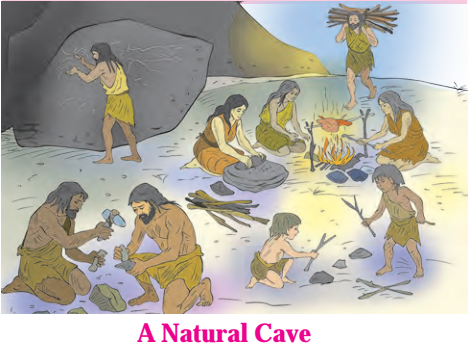
🖼️ Explanation of “A Natural Cave”
🌟 What Is Visible in the Image?
- A group of early humans is living together near a natural cave.
- The cave provides them with a natural shelter.
- Some people are sitting together around a fire.
- One person is carrying a bundle of wood towards the group.
- Two people in the foreground appear to be making or shaping stone tools.
- Other group members are working with stones and collected materials.
- The picture shows that different people are performing different activities together.
| Meanings | मराठी अर्थ | हिंदी अर्थ |
|---|---|---|
| Observe – to look at something carefully. | निरीक्षण करणे – एखादी गोष्ट काळजीपूर्वक पाहणे. | निरीक्षण करना – किसी वस्तु को ध्यान से देखना. |
| Discuss – to talk about a topic with others. | चर्चा करणे – एखाद्या विषयावर इतरांशी बोलणे. | चर्चा करना – किसी विषय पर दूसरों के साथ बात करना. |
| Natural cave – a naturally formed hollow space in rock or a mountain. | नैसर्गिक गुहा – खडकात किंवा डोंगरात नैसर्गिकरीत्या तयार झालेली पोकळ जागा. | प्राकृतिक गुफा – चट्टान या पहाड़ में प्राकृतिक रूप से बनी खोखली जगह. |
✅ Suggested Classroom Discussion
The image shows early humans living together near a natural cave. The cave provides shelter. Some people sit around a fire, while others collect wood, work with stones and make tools. The picture shows group life and the different activities performed by early humans.
💡 Useful Information
The illustration connects with the textbook description of humans living together in natural caves and rock shelters.
🎯 Clear Concept
Early humans used natural caves for shelter and worked together for their daily needs.