
GRADE 6 • HISTORY • SSC MAHARASHTRA STATE BOARD
Chapter 2: Prehistoric Period
Page 8 — Easy Page-wise Explanation
📑 What This Chapter Includes
📜 Textbook Paragraph
🌟 Simple Explanation
- The students are asked to close their eyes for a short time.
- They must form a picture in their minds and imagine living in a very different period.
- In that period, there are no mobile phones for communication.
- There are no cars for travelling and no toys for playing.
- The words about having nothing show that modern objects and comforts do not exist.
- There are no properly built houses or organised villages.
- There are also no schools for education and no roads for travelling.
- This activity helps students imagine how difficult life was before modern facilities developed.
📚 Meanings
| Meanings | मराठी अर्थ | हिंदी अर्थ |
|---|---|---|
| Moment – a very short period of time. | क्षण – खूप थोडा वेळ. | क्षण – बहुत थोड़ा समय. |
| Imagine – to form a picture or idea in the mind. | कल्पना करणे – मनात चित्र किंवा विचार तयार करणे. | कल्पना करना – मन में चित्र या विचार बनाना. |
| Absolutely – completely or fully. | पूर्णपणे – अगदी संपूर्ण रीतीने. | पूरी तरह – बिल्कुल संपूर्ण रूप से. |
| Villages – small groups of houses in the countryside. | गावे – ग्रामीण भागातील घरांच्या छोट्या वस्त्या. | गाँव – ग्रामीण क्षेत्र में घरों की छोटी बस्तियाँ. |
| Roads – paths made for travelling from one place to another. | रस्ते – एका ठिकाणाहून दुसऱ्या ठिकाणी जाण्याचे मार्ग. | सड़कें – एक स्थान से दूसरे स्थान तक जाने के मार्ग. |
💡 Useful Information
This is an imagination activity. It prepares students to understand a period when people did not have the objects, buildings and facilities that are common today.
🎯 Clear Concept
Early human life was very different because modern facilities, organised settlements, schools and roads had not yet developed.
🌟 Simple Explanation of the Question
Imagine that you are living in the early period described above. Explain the activities that you would do from morning to night without modern facilities.
| Meanings | मराठी अर्थ | हिंदी अर्थ |
|---|---|---|
| Daily routine – activities regularly done every day. | दैनंदिन दिनक्रम – दररोज नियमितपणे केली जाणारी कामे. | दैनिक दिनचर्या – हर दिन नियमित रूप से किए जाने वाले काम. |
✅ Suggested Answer
I would wake up with daylight, search for water and known edible food with my group, help maintain our shelter, collect useful materials and stay close to the group for safety. I would rest after sunset.
🌟 Simple Explanation of the Question
Think about a safe natural place where you could stay when properly built houses and villages did not exist.
| Meanings | मराठी अर्थ | हिंदी अर्थ |
|---|---|---|
| Live – to stay in a place and make it one’s home. | राहणे – एखाद्या ठिकाणी निवास करणे. | रहना – किसी स्थान पर निवास करना. |
✅ Suggested Answer
I would live with my group in a safe cave or another strong natural shelter, preferably close to a dependable source of water.
🌟 Simple Explanation of the Question
Explain how you would protect yourself and remain warm in extremely cold weather without modern heating equipment.
| Meanings | मराठी अर्थ | हिंदी अर्थ |
|---|---|---|
| Warmth – a comfortable feeling of heat. | ऊब – उष्णतेची आरामदायक भावना. | गर्माहट – गर्मी की आरामदायक अनुभूति. |
| Freezing cold – extremely cold weather. | गोठवणारी थंडी – अतिशय कडाक्याची थंडी. | कड़ाके की ठंड – बहुत अधिक ठंड. |
✅ Suggested Answer
I would stay inside a protected shelter, use suitable coverings and remain close to a safely maintained fire with my group.
🌟 Simple Explanation of the Question
Think about how food could be made ready when modern kitchens, cooking appliances and packaged foods did not exist.
| Meanings | मराठी अर्थ | हिंदी अर्थ |
|---|---|---|
| Prepare – to make something ready. | तयार करणे – एखादी गोष्ट वापरण्यास तयार करणे. | तैयार करना – किसी चीज को उपयोग के लिए तैयार करना. |
✅ Suggested Answer
I would collect food known to be edible with the help of my group. If fire were available, I would use it carefully to make suitable food easier to eat.
🌟 Simple Explanation of the Question
Explain how you would protect yourself if a wild animal started coming close to you.
| Meanings | मराठी अर्थ | हिंदी अर्थ |
|---|---|---|
| Wild animal – an animal that lives freely in nature. | वन्य प्राणी – निसर्गात मुक्तपणे राहणारा प्राणी. | जंगली जानवर – प्रकृति में स्वतंत्र रूप से रहने वाला जानवर. |
| Approaching – coming nearer. | जवळ येणे – अधिक जवळ येत असणे. | पास आना – अधिक निकट आना. |
✅ Suggested Answer
I would remain calm, keep a safe distance, alert the other members of my group and move carefully towards a protected shelter.
📜 Textbook Paragraph
🌟 Simple Explanation
- Early humans lived hundreds and thousands of years before the present time.
- They faced conditions similar to those imagined in the opening activity.
- They did not have the comforts and useful facilities that people enjoy today.
- Human life did not change suddenly. The development of present-day comforts took millions of years.
- During this long history, early humans first lived a nomadic life and moved from place to place.
- Later, they began to stay in one place and live a settled life.
- They moved from living mainly in forests to forming early settlements.
- With further development, human communities became more organised and formed advanced civilizations.
- The chapter will explain these early stages of human development in their proper order.
| Meanings | मराठी अर्थ | हिंदी अर्थ |
|---|---|---|
| Circumstances – the conditions in which someone lives. | परिस्थिती – एखादी व्यक्ती ज्या स्थितीत राहते ती अवस्था. | परिस्थितियाँ – वे हालात जिनमें कोई व्यक्ति रहता है. |
| Achieve – to successfully obtain something. | साध्य करणे – प्रयत्न करून मिळवणे. | प्राप्त करना – प्रयास करके हासिल करना. |
| Comforts – things that make life easier and more pleasant. | सुखसोयी – जीवन सोपे व आरामदायक करणाऱ्या गोष्टी. | सुख-सुविधाएँ – जीवन को आसान और आरामदायक बनाने वाली चीजें. |
| Facilities – useful services or things provided for people. | सुविधा – लोकांसाठी उपलब्ध केलेल्या उपयोगी सोयी. | सुविधाएँ – लोगों के लिए उपलब्ध उपयोगी सेवाएँ या साधन. |
| Nomadic – moving from place to place without a permanent home. | भटके – कायमचे घर नसल्याने एका ठिकाणाहून दुसरीकडे फिरणारे. | घुमंतू – स्थायी घर के बिना एक स्थान से दूसरे स्थान पर जाने वाले. |
| Settled life – living permanently in one place. | स्थिर जीवन – एका ठिकाणी कायम राहून जगणे. | स्थायी जीवन – एक ही स्थान पर स्थायी रूप से रहना. |
| Settlements – places where groups of people begin to live. | वस्त्या – लोक एकत्र राहू लागलेली ठिकाणे. | बस्तियाँ – वे स्थान जहाँ लोग समूह में रहने लगते हैं. |
| Advanced civilization – a highly developed and organised human society. | प्रगत संस्कृती – अधिक विकसित आणि संघटित मानवी समाज. | उन्नत सभ्यता – अधिक विकसित और संगठित मानव समाज. |
💡 Useful Information
Nomadic life means moving from place to place. Settled life means staying in one place and forming a settlement. This change happened gradually over a very long period.
🎯 Clear Concept
Human life slowly developed from a wandering forest life to settled communities and then to advanced civilization.
🌟 Simple Explanation
Students have already learnt about the different stages through which humans developed. They have also studied how early humans lived, what they ate, which tools they used and what kind of art they made. They should remember and revise these topics together in class.
| Meanings | मराठी अर्थ | हिंदी अर्थ |
|---|---|---|
| Stages – separate steps in a process of development. | टप्पे – विकासाच्या प्रक्रियेतील वेगवेगळ्या पायऱ्या. | चरण – विकास की प्रक्रिया के अलग-अलग कदम. |
| Human evolution – the gradual development of humans over a long period. | मानवी उत्क्रांती – दीर्घ काळात झालेला मानवाचा हळूहळू विकास. | मानव विकास – लंबे समय में मनुष्य का धीरे-धीरे हुआ विकास. |
| Dietary habits – the usual kinds of food people eat. | आहाराच्या सवयी – लोक नियमितपणे खात असलेल्या अन्नाच्या सवयी. | खान-पान की आदतें – लोगों द्वारा सामान्य रूप से खाया जाने वाला भोजन. |
| Aspects – different parts or features of a subject. | पैलू – एखाद्या विषयाचे वेगवेगळे भाग. | पहलू – किसी विषय के अलग-अलग भाग. |
| Recall – to remember something learnt earlier. | आठवणे – आधी शिकलेली गोष्ट स्मरणात आणणे. | याद करना – पहले सीखी हुई बात को स्मरण करना. |
| Revise – to study something again. | उजळणी करणे – शिकलेली गोष्ट पुन्हा अभ्यासणे. | दोहराना – सीखी हुई बात को फिर से पढ़ना. |
📝 Class Revision
Revise the stages of human development together with the changes in early humans’ life, food habits, tools and art.
💡 Useful Information
Human evolution refers to gradual human development over a very long period. It did not happen in one single step.
🎯 Clear Concept
Previous knowledge about early humans will help students understand this chapter.
Chapter 2 • Section 2.1
🌍 Ancient India – Geographical Background
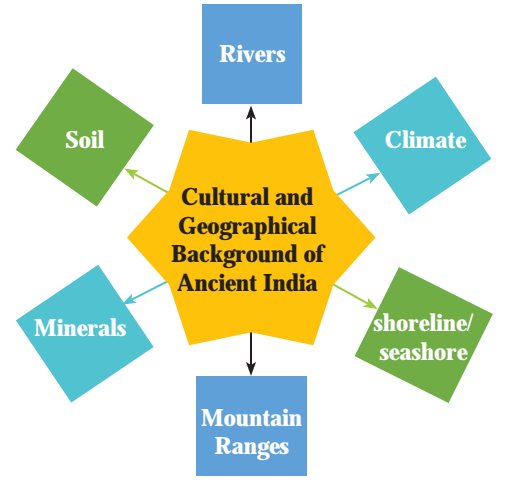
The concept map appearing next shows the important natural features connected with the cultural and geographical background of ancient India.
🖼️ Concept-Map Explanation
🌟 Simple Explanation
The concept map shows the natural features connected with the cultural and geographical background of ancient India. These features include rivers, climate, soil, minerals, mountain ranges and the shoreline or seashore.
| Meanings | मराठी अर्थ | हिंदी अर्थ |
|---|---|---|
| Soil – the upper layer of earth in which plants grow. | माती – जमिनीचा वरचा थर ज्यामध्ये झाडे वाढतात. | मिट्टी – धरती की ऊपरी परत जिसमें पौधे उगते हैं. |
| Climate – the usual weather conditions of a region. | हवामान – एखाद्या प्रदेशातील नेहमीची हवामानाची स्थिती. | जलवायु – किसी क्षेत्र की सामान्य मौसम की स्थिति. |
| Minerals – useful natural substances found in the earth. | खनिजे – जमिनीत सापडणारे उपयोगी नैसर्गिक पदार्थ. | खनिज – धरती में पाए जाने वाले उपयोगी प्राकृतिक पदार्थ. |
| Mountain ranges – long groups or chains of mountains. | पर्वतरांगा – पर्वतांच्या लांब रांगा. | पर्वत शृंखलाएँ – पहाड़ों की लंबी कतारें. |
| Shoreline – the line where land meets water. | किनारपट्टी – जमीन आणि पाणी एकमेकांना मिळतात ती रेषा. | तटरेखा – वह रेखा जहाँ भूमि और पानी मिलते हैं. |
| Seashore – land along the edge of the sea. | समुद्रकिनारा – समुद्राच्या काठावरील जमीन. | समुद्र तट – समुद्र के किनारे की भूमि. |
💡 Useful Information
These natural features together form the geographical background of a region. They help us understand the natural surroundings in which human communities developed.
🎯 Clear Concept
Rivers, climate, soil, minerals, mountains and seashores are important parts of a region’s geographical background.
📜 Textbook Paragraph
🌟 Simple Explanation
- Every region has its own geographical or natural conditions.
- These conditions play an important part in the development of human history.
- The paragraph begins listing mountains, rivers, climate and land as examples of these conditions.
- The sentence is unfinished on page 8 and continues on the next textbook page.
| Meanings | मराठी अर्थ | हिंदी अर्थ |
|---|---|---|
| Geographical conditions – the natural features and conditions of a place. | भौगोलिक परिस्थिती – एखाद्या ठिकाणाची नैसर्गिक वैशिष्ट्ये आणि स्थिती. | भौगोलिक परिस्थितियाँ – किसी स्थान की प्राकृतिक विशेषताएँ और दशाएँ. |
| Respective region – the particular area being discussed. | संबंधित प्रदेश – ज्या विशिष्ट भागाबद्दल चर्चा केली जाते तो भाग. | संबंधित क्षेत्र – वह विशेष क्षेत्र जिसके बारे में चर्चा की जा रही है. |
| Development – the process of growing or becoming more advanced. | विकास – वाढण्याची किंवा अधिक प्रगत होण्याची प्रक्रिया. | विकास – बढ़ने या अधिक उन्नत होने की प्रक्रिया. |
| Human history – the story and study of human life in the past. | मानवी इतिहास – भूतकाळातील मानवी जीवनाची माहिती आणि अभ्यास. | मानव इतिहास – अतीत के मानव जीवन की जानकारी और अध्ययन. |
💡 Useful Information
A region means a particular area. Its geographical conditions include the natural features found in and around that area.
🎯 Clear Concept
The natural conditions of a region are closely connected with the development of human history. The complete explanation will continue with textbook page 9.