
GRADE 6 • HISTORY • SSC MAHARASHTRA STATE BOARD
Chapter 2: Prehistoric Period
Page 14 — Final Page of the Chapter
🏺 2.5 Excavation Sites in Maharashtra
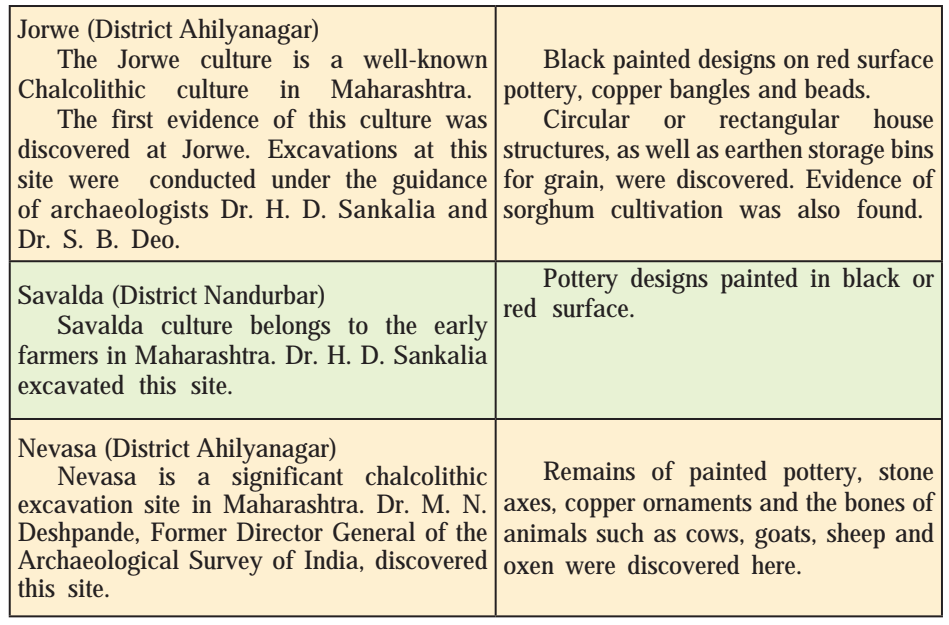
🏺 Explanation of the Excavation Table
🌟 What Does This Part of the Table Show?
This final part of the table describes the Jorwe, Savalda and Nevasa Chalcolithic sites. It also presents the archaeological evidence discovered during excavations at these sites.
📍 Jorwe — District Ahilyanagar
- Jorwe culture is a well-known Chalcolithic culture of Maharashtra.
- The first evidence of this culture was discovered at Jorwe.
- Excavations were conducted under the guidance of Dr. H. D. Sankalia and Dr. S. B. Deo.
- Pottery having black-painted designs on a red surface was found.
- Copper bangles and beads were discovered.
- Evidence of circular and rectangular houses was found.
- Earthen storage bins used for keeping grain were discovered.
- Evidence of sorghum or jowar cultivation was also found.
📍 Savalda — District Nandurbar
- Savalda culture belonged to the early farmers of Maharashtra.
- Dr. H. D. Sankalia excavated this archaeological site.
- Pottery decorated with black or red designs was discovered.
📍 Nevasa — District Ahilyanagar
- Nevasa is an important Chalcolithic excavation site in Maharashtra.
- Dr. M. N. Deshpande, a former Director General of the Archaeological Survey of India, discovered the site.
- Remains of painted pottery were found.
- Stone axes and copper ornaments were discovered.
- Animal evidence associated with cows, goats, sheep and oxen was also found.
| Meanings | मराठी अर्थ | हिंदी अर्थ |
|---|---|---|
| Well-known – known by many people. | सुप्रसिद्ध – अनेक लोकांना माहिती असलेले. | प्रसिद्ध – जिसे बहुत से लोग जानते हों. |
| Evidence – objects or facts that help explain the past. | पुरावा – भूतकाळ समजण्यास मदत करणाऱ्या वस्तू किंवा माहिती. | प्रमाण – अतीत को समझने में सहायक वस्तुएँ या जानकारी. |
| Under the guidance – with the direction and help of an expert. | मार्गदर्शनाखाली – तज्ज्ञाच्या दिशा आणि मदतीने. | मार्गदर्शन में – विशेषज्ञ के निर्देश और सहायता से. |
| Circular – having the shape of a circle. | वर्तुळाकार – वर्तुळासारखा आकार असलेले. | गोलाकार – वृत्त जैसा आकार वाला. |
| Rectangular – having the shape of a rectangle. | आयताकृती – आयतासारखा आकार असलेले. | आयताकार – आयत जैसा आकार वाला. |
| Earthen storage bins – clay containers used for storing grain. | मातीच्या धान्यकोठ्या – धान्य साठवण्यासाठी वापरलेली मातीची भांडी किंवा कोठारे. | मिट्टी के भंडार – अनाज रखने के लिए उपयोग किए गए मिट्टी के पात्र. |
| Excavated – carefully dug to discover ancient evidence. | उत्खनन केले – प्राचीन पुरावे शोधण्यासाठी काळजीपूर्वक खोदले. | खुदाई की – प्राचीन प्रमाण खोजने के लिए सावधानी से खोदा. |
| Significant – important and worthy of attention. | महत्त्वपूर्ण – विशेष लक्ष देण्याइतके महत्त्वाचे. | महत्त्वपूर्ण – विशेष ध्यान देने योग्य. |
| Ornaments – decorative objects worn on the body. | दागिने – शरीरावर घालण्यासाठी वापरलेल्या सजावटी वस्तू. | आभूषण – शरीर पर पहनी जाने वाली सजावटी वस्तुएँ. |
| Oxen – adult male cattle commonly used for work. | बैल – कामासाठी वापरले जाणारे प्रौढ नर गोवंशीय प्राणी. | बैल – काम के लिए उपयोग किए जाने वाले वयस्क नर पशु. |
💡 Useful Information
The excavated houses, pottery, ornaments, tools, grain-storage structures and farming evidence help us understand the daily lives of Chalcolithic communities.
🎯 Clear Concept
Jorwe, Savalda and Nevasa provide valuable evidence about Chalcolithic farming, houses, pottery, tools and ornaments in Maharashtra.
🌟 Simple Explanation of the Activity
Find the river beside which each excavation site mentioned in the table is located. The verified answer is given below.
✅ Verified Answer
| Excavation Site | District | Riverbank |
|---|---|---|
| Daimabad | Ahilyanagar | Pravara River |
| Inamgaon | Pune | Ghod River |
| Jorwe | Ahilyanagar | Pravara River |
| Savalda | Nandurbar | Tapi River |
| Nevasa | Ahilyanagar | Pravara River |
🎯 Clear Concept
Most of these Chalcolithic sites developed beside rivers because river regions supported water availability, agriculture and settled life.