Harappan Civilisation
Chapter 3 · Maharashtra Board · Textbook Page 21
The world’s oldest ploughed agricultural field has been discovered at Kalibangan. This site is situated on the banks of the Ghaggar River, in the Hanumangarh district of Rajasthan.
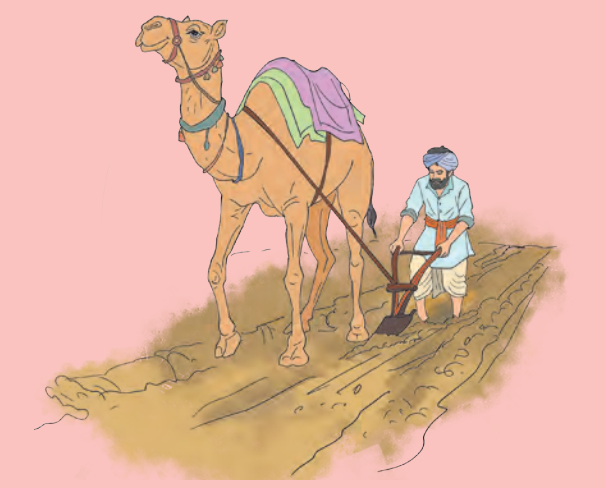
This indicates that the people of Kalibangan were advanced in their agricultural practices. They cultivated a variety of grains, including wheat, barley, and chickpeas. Even today, camels are used for ploughing in Rajasthan. A striking resemblance can be observed between the plough marks of the Harappan times and the present day fields of Rajasthan.
Another distinctive feature of Kalibangan is the discovery of fire altars,
Simple Explanation
The box tells us that the world’s oldest ploughed agricultural field was discovered at Kalibangan.
Kalibangan is situated on the banks of the Ghaggar River, in the Hanumangarh district of Rajasthan.
This discovery shows that the people of Kalibangan had developed advanced agricultural practices.
They grew different types of grains. The page specifically mentions wheat, barley and chickpeas.
The page also tells us that even today, camels are used for ploughing in Rajasthan.
There is a noticeable similarity between the plough marks from Harappan times and the marks seen in the present-day fields of Rajasthan.
Another special feature of Kalibangan was the discovery of fire altars. The sentence continues after the illustration, so the explanation of the remaining part is given in the next HTML block.
| Meanings | Marathi Arth | Hindi Arth |
|---|---|---|
| Ploughed — land prepared by turning the soil | नांगरलेली | जुती हुई / जुताई की हुई |
| Agricultural — related to farming | शेतीशी संबंधित | कृषि संबंधी |
| Discovered — found for the first time | शोधले / सापडले | खोजा गया |
| Banks — land beside a river | नदीचा काठ | नदी का किनारा |
| Advanced — developed and improved | प्रगत | उन्नत / विकसित |
| Agricultural practices — methods of farming | शेतीच्या पद्धती | कृषि पद्धतियाँ |
| Cultivated — grew crops | लागवड केली | फसल उगाई |
| Chickpeas — a type of pulse | हरभरा | चना |
| Ploughing — turning and preparing soil for farming | नांगरणी | जुताई |
| Resemblance — similarity | साम्य / साम्यता | समानता |
| Distinctive — special or different | वैशिष्ट्यपूर्ण | विशिष्ट |
| Fire altars — structures associated with fire rituals | अग्निवेदिका | अग्नि वेदियाँ |
which were perhaps used for performing religious rituals. Much like other cities of the Harappan civilisation, this site also features a planned drainage system, brick-built houses and samples of seals.
Simple Explanation
The fire altars discovered at Kalibangan were perhaps used for religious rituals.
Kalibangan had several features similar to other Harappan cities. It had a planned drainage system, which means the drainage was carefully arranged.
It also had houses built with bricks.
Samples of seals have also been found at the site.
| Meanings | Marathi Arth | Hindi Arth |
|---|---|---|
| Religious rituals — activities performed as part of religious practices | धार्मिक विधी | धार्मिक अनुष्ठान |
| Planned — arranged carefully in advance | नियोजित | नियोजित |
| Drainage system — system for carrying away waste water | जलनिस्सारण व्यवस्था | जल निकासी व्यवस्था |
| Brick-built — made using bricks | विटांनी बांधलेले | ईंटों से बना हुआ |
| Samples — small examples or pieces collected for study | नमुने | नमूने |
| Seals — small objects bearing designs or inscriptions | शिक्के | मुहरें |
Trade Relations and Exchange of Goods
The people of the Harappan civilisation had established trade relations not only with neighboring villages and cities but also with distant lands. They were engaged in the exchange of goods with regions corresponding to Mesopotamia (modern-day Iraq) and
Simple Explanation
The Harappan people had developed trade relations with nearby villages and cities.
Their trade was not limited to nearby places. They also traded with distant lands.
They exchanged goods with regions connected with Mesopotamia, which the textbook identifies as modern-day Iraq.
The sentence continues on the next part of the page.
| Meanings | Marathi Arth | Hindi Arth |
|---|---|---|
| Established — started or developed | स्थापन केले | स्थापित किया |
| Trade relations — connections formed through buying, selling or exchanging goods | व्यापारी संबंध | व्यापारिक संबंध |
| Neighboring — nearby | शेजारील | पड़ोसी / आस-पास के |
| Distant — far away | दूरचे | दूरस्थ |
| Exchange — giving something and receiving something in return | देवाणघेवाण | आदान-प्रदान |
| Goods — things that are bought, sold or exchanged | वस्तू | वस्तुएँ |
| Mesopotamia — ancient region corresponding to modern-day Iraq | मेसोपोटेमिया | मेसोपोटामिया |
Egypt. They traded in beads, jewellery, pottery and cotton. In exchange, they imported metals, precious stones and other commodities. Among these, faience and long carnelian beads played a significant role in the Harappan export. Faience is a glass-like material, having in shades of blue, green and turquoise. Faience bangles, beads and jewellery produced in Harappa reached Sumer in southern Mesopotamia in large quantities via established trade routes. Carnelian, a reddish-hued gemstone, was fashioned into both long and spherical beads. These beads were traded in Mesopotamia, where they were used in jewellery as well as making religious artifacts. This trade brought economic prosperity to the Harappan civilisation.
Simple Explanation
The previous paragraph continues by mentioning Egypt. The Harappan people traded with distant regions such as Mesopotamia and Egypt.
They traded items such as beads, jewellery, pottery and cotton.
In return, they imported metals, precious stones and other commodities.
Two important products in Harappan exports were faience and long carnelian beads.
Faience is described as a glass-like material. It had shades of blue, green and turquoise.
Faience bangles, beads and jewellery made in Harappa reached Sumer in southern Mesopotamia in large quantities. They travelled through established trade routes.
Carnelian was a reddish-coloured gemstone. It was shaped into long and spherical beads.
These carnelian beads were traded in Mesopotamia. There, they were used for making jewellery and religious artefacts.
This trade helped bring economic prosperity to the Harappan civilisation. In simple words, trade helped the Harappan civilisation become economically prosperous.
| Meanings | Marathi Arth | Hindi Arth |
|---|---|---|
| Jewellery — decorative items worn on the body | दागिने | आभूषण / गहने |
| Commodities — goods or useful products | वस्तू / माल | वस्तुएँ / माल |
| Export — goods sent to another region or country for trade | निर्यात | निर्यात |
| Faience — a glass-like material | काचेप्रमाणे पदार्थ | काँच जैसा पदार्थ |
| Turquoise — a blue-green colour | निळसर हिरवा रंग | नीला-हरा रंग |
| Established — already developed or set up | स्थापित | स्थापित |
| Trade routes — paths used for trading goods | व्यापारी मार्ग | व्यापार मार्ग |
| Carnelian — a reddish-coloured gemstone | लालसर रंगाचा मौल्यवान दगड | लाल रंग का रत्न |
| Spherical — round like a ball | गोलाकार | गोलाकार |
| Artefacts — objects made or used by people in the past | पुरावस्तू | पुरावशेष / कलाकृतियाँ |
| Prosperity — state of being successful and wealthy | समृद्धी | समृद्धि |
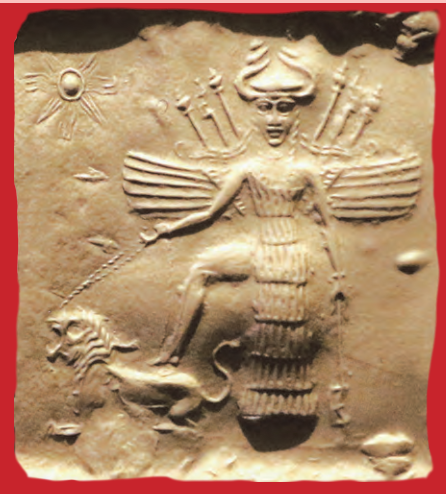
Goddess Inanna was a prominent deity in Sumerian culture. Mythological stories found in Mesopotamian epics provide us with valuable insights into the Harappan trade. Goddess Inanna
Simple Explanation
Goddess Inanna was an important deity, or goddess, in Sumerian culture.
The page says that mythological stories found in Mesopotamian epics give us useful information about the trade of the Harappan civilisation.
The visible text then mentions Goddess Inanna again. The sentence continues beyond the bottom of this textbook page, so no additional information has been added here.
| Meanings | Marathi Arth | Hindi Arth |
|---|---|---|
| Goddess — a female deity | देवी | देवी |
| Prominent — important and well-known | प्रमुख | प्रमुख |
| Deity — a god or goddess worshipped by people | देवता / देवी | देवता / देवी |
| Sumerian — related to Sumer | सुमेरियन | सुमेरियन |
| Mythological — related to traditional stories about gods and heroes | पौराणिक | पौराणिक |
| Epics — long traditional stories or poems | महाकाव्ये | महाकाव्य |
| Insights — useful understanding gained from information | अंतर्दृष्टी / माहिती | अंतर्दृष्टि / जानकारी |