
GRADE 6 • HISTORY • MAHARASHTRA BOARD
HARAPPAN CIVILISATION
QUESTION SET – 3
Chapter 3
Instructions:
- Read all the questions carefully.
- Answer the questions as instructed.
- Use the textbook content while answering the questions.
Q.1 A) Select the correct option from the given alternatives.
[5]
1.
The Mature Harappan Period lasted approximately from:
A) 3300 to 2600 BCE
B) 2600 to 1900 BCE
C) 1900 to 1300 BCE
D) 2300 to 1900 BCE
2.
Which Harappan site is situated on the banks of the Ghaggar River?
A) Kalibangan
B) Lothal
C) Dholavira
D) Manda
3.
Which of the following was used by Harappan people for cooking?
A) Iron vessels
B) Earthen pottery
C) Silver vessels
D) Stone tanks
4.
Which material was described as glass-like and found in blue, green and turquoise shades?
A) Carnelian
B) Lapis Lazuli
C) Faience
D) Copper
5.
Which Harappan artifact is famously known as the ‘Dancing Girl’?
A) A bronze figurine
B) A stone seal
C) A pottery vessel
D) A gold ornament
Q.1 B) Write whether the following statements are True or False.
[5]
1.
The Early Harappan Period marked the beginning of the process of urbanisation.
2.
The Harappan Civilisation covered an area of approximately 1.5 million square kilometres.
3.
The section south of the Citadel was occupied by administrators.
4.
The Harappan people used ornaments such as necklaces, earrings, armbands, bangles, rings and waistbands.
5.
Lothal was an important Harappan port.
Q.2) Answer in brief.
[8]
1.
What were the three successive phases of the Harappan Civilisation?
2.
Why were Harappan settlements established along the riverbanks?
3.
What types of designs and decorative motifs were found on Harappan pottery?
4.
What ornaments were used by the people of the Harappan Civilisation?
Q.3) Write short notes.
[8]
1.
Dietary Habits of the Harappan people
2.
Clothing Style and Ornaments
3.
Lothal as a significant port
4.
Art and Entertainment in Harappan Civilisation
Q.4) Observe the map provided in the lesson and answer the following questions.
[4]
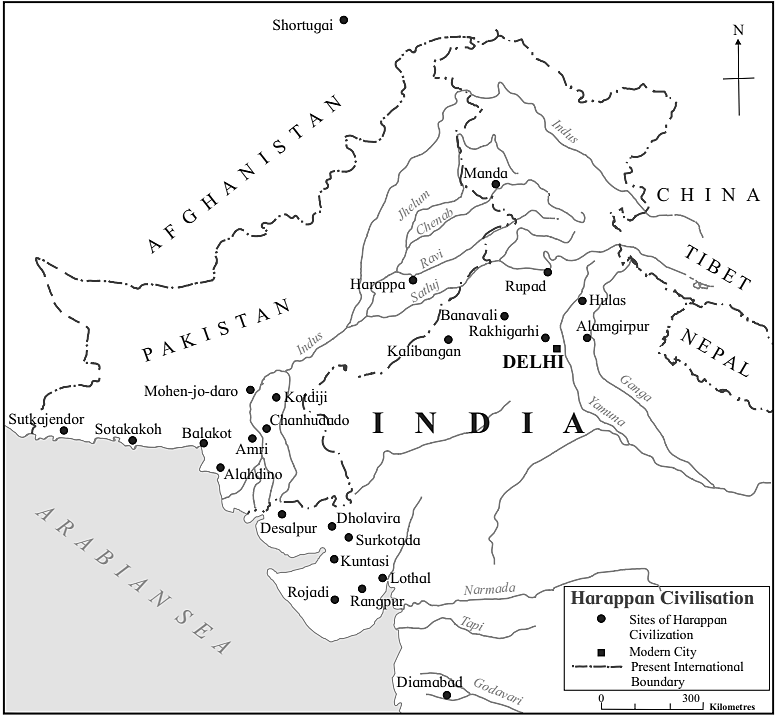
1.
Name any Harappan site located in Gujarat, India.
2.
Name any Harappan site located in present-day Pakistan.
3.
Name the Harappan site located in Jammu and Kashmir.
4.
Name the Harappan site located in Maharashtra.
Q.5) Answer in detail.
[12]
1.
Describe the main features of the lifestyle and construction of houses during the Harappan period.
2.
Explain the clothing style and ornament-making skills of the Harappan people.
3.
Explain the role of agriculture, crafts and long-distance trade in the Harappan Civilisation.
Activity
1.
Create replica of an excavated site of the Harappan Civilisation.
2.
Compare the road plans in your locality with the Harappan road plans.
Project
1.
Create models of the well-planned cities, houses, roads, water management systems and drainage systems of the Harappan period.
2.
Get the information about the ‘Sant Gadgebaba Gram Swachhata Abhiyan’ from the website of the Government of Maharashtra and present it in class.
Question Set – 3
|
Harappan Civilisation
|
Grade 6 History
GRADE 6 • HISTORY • MAHARASHTRA BOARD
SOLUTION
HARAPPAN CIVILISATION
QUESTION SET – 3
Chapter 3
Q.1 A) Select the correct option from the given alternatives.
[5]
1. The Mature Harappan Period lasted approximately from:
Ans. B) 2600 to 1900 BCE.
2. Which Harappan site is situated on the banks of the Ghaggar River?
Ans. A) Kalibangan.
3. Which of the following was used by Harappan people for cooking?
Ans. B) Earthen pottery.
4. Which material was described as glass-like and found in blue, green and turquoise shades?
Ans. C) Faience.
5. Which Harappan artifact is famously known as the ‘Dancing Girl’?
Ans. A) A bronze figurine.
Q.1 B) Write whether the following statements are True or False.
[5]
1. The Early Harappan Period marked the beginning of the process of urbanisation.
Ans. True.
2. The Harappan Civilisation covered an area of approximately 1.5 million square kilometres.
Ans. True.
3. The section south of the Citadel was occupied by administrators.
Ans. False.
4. The Harappan people used ornaments such as necklaces, earrings, armbands, bangles, rings and waistbands.
Ans. True.
5. Lothal was an important Harappan port.
Ans. True.
Q.2) Answer in brief.
[8]
1. What were the three successive phases of the Harappan Civilisation?
Ans. The three successive phases were the Early Harappan Period, the Mature Harappan Period and the Late Harappan Period.
2. Why were Harappan settlements established along the riverbanks?
Ans. The riverbanks provided availability of water, fertile land and a system of transport. These factors helped in establishing settlements along the riverbanks.
3. What types of designs and decorative motifs were found on Harappan pottery?
Ans. Harappan pottery featured painted designs and decorative motifs. The motifs included symbols such as fish scales, intersecting circles and Pipal leaves.
4. What ornaments were used by the people of the Harappan Civilisation?
Ans. They used ornaments like necklaces, earrings, armbands, bangles, rings and waistbands.
Q.3) Write short notes.
[8]
1. Dietary Habits of the Harappan people
Ans. Wheat, barley, peas, sesame seeds, finger millet (Ragi), lentils and various types of pulses formed the staple diet of the people. Archaeological evidence suggests that milk, meat and fish were also consumed in certain regions. Earthen pottery was used for cooking.
2. Clothing Style and Ornaments
Ans. Harappan people used cotton and silk garments. Both men and women used a knee-length skirt and an upper garment. The people were highly skilled in crafting ornaments. They made beads using clay, colourful semi-precious stones, shells, copper, silver and gold. They used necklaces, earrings, armbands, bangles, rings and waistbands.
3. Lothal as a significant port
Ans. During the Harappan period Lothal served as a significant port. A massive dockyard has been discovered at this site. The trade of the Harappan civilisation extended along the coast of the Arabian Sea, reaching as far as the Persian Gulf. The Harappan seals were used primarily for trade purposes.
4. Art and Entertainment in Harappan Civilisation
Ans. The people of the Harappan civilisation were skilled artisans. They created beautiful objects using clay, metals and precious stones. A bronze figurine discovered from the Harappan civilisation is famously known as the ‘Dancing Girl’. They also created animal figurines, toys and seals. Objects recovered during archaeological excavations included clay toys such as animal figurines, wheeled carts, spinning tops and whistles.
Q.4) Observe the map provided in the lesson and answer the following questions.
[4]
1. Name any Harappan site located in Gujarat, India.
Ans. Dholavira.
2. Name any Harappan site located in present-day Pakistan.
Ans. Harappa.
3. Name the Harappan site located in Jammu and Kashmir.
Ans. Manda.
4. Name the Harappan site located in Maharashtra.
Ans. Diamabad.
Q.5) Answer in detail.
[12]
1. Describe the main features of the lifestyle and construction of houses during the Harappan period.
Ans. The houses of Harappan people were mainly built by using baked bricks. The method used for constructing houses was generally known as the ‘English Bond’ masonry. In this method, while building a wall, two headers and two stretchers were used alternately. It made the walls exceptionally strong and durable. The bricks used were of standardized proportion. A typical brick used to have a ratio of 1:2:4. Harappan people adopted this method to ensure the safety of their homes from floods, earthquakes and the gradual wear and tear caused by the passage of time. The houses featured a central courtyard surrounded by rooms, along with a well and a toilet situated near the entrance. The systems for water supply and waste water disposal were exceptionally efficient. Baked earthen conduits were utilized to drain waste water out of every house. The street drains were constructed using bricks and were kept properly covered.
2. Explain the clothing style and ornament-making skills of the Harappan people.
Ans. The clothing style and ornaments of the Harappan people provide insights into the technology, aesthetic sensibilities and lifestyle of those times. Harappan people used cotton and silk garments. Both men and women used a knee-length skirt and an upper garment. The people of the Harappan Civilisation were highly skilled in crafting ornaments. They made beads using clay, colourful semi-precious stones, shells, copper, silver and gold. These beads were in high demand especially in Mesopotamia. The people of the Harappan Civilisation used ornaments like necklaces, earrings, armbands, bangles, rings and waistbands.
3. Explain the role of agriculture, crafts and long-distance trade in the Harappan Civilisation.
Ans. The people of the Harappan Civilisation practised agriculture and cultivated a variety of crops. Wheat and barley were their principal crops. The people were familiar with cotton. Harappan artisans were engaged in various occupations, such as making various types of objects from iron, bronze, clay and gold, as well as weaving textiles. They produced exquisite pottery. They were familiar with sailing, which enabled them to conduct long-distance trade. They traded in beads, jewellery, pottery and cotton. In exchange, they imported metals, precious stones and other commodities. Faience and long carnelian beads played a significant role in the Harappan export. This trade brought economic prosperity to the Harappan civilisation.
Activity
1. Create replica of an excavated site of the Harappan Civilisation.
Ans. A model can be prepared showing the well-planned houses, broad roads, drainage system and other features of a Harappan settlement described in the chapter.
2. Compare the road plans in your locality with the Harappan road plans.
Ans. Harappan streets were broad and laid out in a grid pattern. Houses were built in the rectangular blocks created by the roads. Students can compare these features with the roads and layout of their own locality.
Project
1. Create models of the well-planned cities, houses, roads, water management systems and drainage systems of the Harappan period.
Ans. Prepare a model showing Harappan town planning, broad grid-pattern roads, houses built with baked bricks, water supply arrangements and covered street drainage systems.
2. Get the information about the ‘Sant Gadgebaba Gram Swachhata Abhiyan’ from the website of the Government of Maharashtra and present it in class.
Ans. Collect the required information from the Government of Maharashtra website and present the information in class as instructed in the textbook.
Question Set – 3 • Solution
|
Harappan Civilisation
|
Grade 6 History